

Air Conditioning Installation in Anderson, CA
A new air conditioner should do more than replace the equipment sitting outside. It needs enough capacity for Anderson’s summer heat, sufficient airflow through the home, compatible indoor and outdoor components, and controls that allow the complete system to operate as intended. Bickley’s Air Conditioning & Heating installs central cooling systems for existing homes, remodeling projects, and new construction. Our family-owned company has served Northern California since 1983. Call (530) 527-7188 to request an air-conditioning installation estimate.Is It Time to Replace Your Air Conditioner?
An older system does not automatically need replacement. If the problem is isolated, parts remain available, and the equipment still cools the home effectively, professional air conditioning repair in Anderson may be the more practical first step. Replacement becomes easier to justify when repairs are recurring, a major component is deteriorating, or the system runs for long periods without maintaining comfortable temperatures. Rising energy use, persistent room-to-room differences, refrigerant or parts limitations, and equipment that no longer matches the home can also influence the decision.- Breakdowns are becoming more frequent.
- Major repair costs are accumulating.
- The system struggles during the hottest weather.
- Some rooms remain uncomfortable despite normal operation.
- The indoor and outdoor components are mismatched or deteriorating.
- Home improvements have changed the heating or cooling load.
- You want to compare central air with a heat pump or ductless system.
Why Does Correct Air-Conditioner Sizing Matter?
Cooling equipment should be selected according to the home’s cooling load rather than square footage or the capacity of the old unit alone. Windows, insulation, air leakage, ceiling height, sun exposure, orientation, occupancy, and ductwork all affect how much heat enters the building. An undersized system may run continuously and still struggle during peak heat. Oversized equipment can cool the thermostat area quickly and shut off before temperatures become even throughout the house. Repeated short cycles may also increase wear and make comfort less consistent. Bickley’s considers the home’s size, layout, insulation, and airflow when helping homeowners compare equipment. These factors are especially important when additions, window replacements, insulation upgrades, or remodeling have changed the structure since the existing system was installed.Can the Existing Ductwork Support the New System?
The outdoor air conditioner and indoor coil depend on the duct system to move the correct volume of air. Restrictions, leakage, damaged insulation, crushed sections, closed dampers, or undersized return ducts can reduce delivered cooling even when the new equipment is operating correctly. A larger air conditioner may require more airflow than the existing ducts can provide. Installing that equipment without addressing the restriction can increase noise, static pressure, and blower strain. In other homes, the ducts remain usable with sealing, balancing, or targeted corrections rather than complete replacement. Room-to-room temperature differences should be discussed before installation. A new condenser will not automatically correct every comfort problem if the underlying cause is duct leakage, poor return-air pathways, insulation, or heavy sun exposure.What Other Parts of the HVAC System Must Be Matched?
A central cooling system includes more than an outdoor condenser. The indoor coil, furnace or air handler, blower, thermostat, refrigerant piping, electrical circuit, safety controls, and condensate drainage must work together. Mismatched equipment can limit capacity, efficiency, humidity removal, and manufacturer-supported performance. Electrical-panel capacity and circuit requirements should also be checked before installation. Refrigerant, high-voltage electrical, and internal equipment work should always be completed by qualified professionals. Homeowners considering several heating and cooling configurations can also rely on Bickley’s for broader HVAC services in Anderson. Comparing the complete system before choosing equipment can prevent an air-conditioning decision from creating a heating, airflow, or electrical mismatch.Central Air, Heat Pump, or Ductless Mini Split?
Central Air Conditioning
Central air uses an outdoor condenser, an indoor coil, and the home’s duct system to provide whole-home cooling. It can be a practical choice when the existing furnace or air handler and ductwork are suitable for the new equipment.Heat Pumps
A heat pump uses similar refrigeration principles but reverses operation to provide heating as well as cooling. It may be worth considering when the homeowner wants to replace separate heating and cooling equipment or move toward an all-electric HVAC system.Ductless Mini Splits
A mini split is a ductless heat pump with one or more indoor units. It can provide targeted comfort for additions, converted garages, workshops, home offices, guest spaces, and homes where extending central ductwork would be difficult. The best choice depends on whether usable ducts exist, how much of the home needs conditioning, electrical capacity, heating requirements, desired zoning, and the scope of the project.What Should a Complete Installation Include?
Installation quality influences comfort and equipment life as much as the model selected. A complete project should address the system from equipment selection through startup rather than treating installation as a simple equipment swap.- Evaluate the existing system: Review equipment condition, comfort problems, electrical requirements, airflow, controls, and ductwork.
- Determine the cooling load: Consider the home’s construction, insulation, windows, air leakage, layout, and summer heat exposure.
- Select compatible components: Match the outdoor equipment, indoor coil, blower, controls, refrigerant requirements, and available airflow.
- Prepare the installation: Address the equipment location, electrical connections, refrigerant piping, drainage, duct transitions, and required clearances.
- Install the equipment: Complete the mechanical, refrigeration, electrical, condensate, control, and airflow connections.
- Start and test the system: Confirm cooling operation, temperatures, airflow, controls, drainage, and equipment response.
- Review system operation: Explain thermostat use, filter requirements, basic equipment care, and warranty-registration responsibilities.
What Affects Air-Conditioning Installation Cost?
Installation cost varies because equipment and home conditions differ. A proposal should reflect the actual system configuration and required work rather than a generic price based only on square footage.- Cooling capacity and equipment efficiency
- Central air, heat pump, or ductless configuration
- Condition and capacity of the existing ductwork
- Compatibility with the furnace or air handler
- Electrical-panel, circuit, and disconnect requirements
- Refrigerant-line and condensate-drain changes
- Thermostat and control upgrades
- Indoor and outdoor equipment access
- Removal and disposal of existing equipment
- Permits or inspections when applicable
How Anderson’s Climate Affects System Selection
Long periods of hot, dry weather can keep cooling equipment operating for extended cycles. A system needs sufficient capacity for demanding afternoons without being oversized for normal conditions. Sun exposure, attic temperatures, insulation, and duct location can all influence the cooling load. Dust can restrict filters and coat heat-transfer surfaces, while smoke season may lead homeowners to keep windows closed and operate the system for longer periods. Filter selection must balance particle capture with the airflow the equipment can support; a highly restrictive filter can create problems when the duct and blower system are not designed for it.YORK Air Conditioning Systems Installed by Bickley’s
Bickley’s is a YORK Certified Comfort Expert and installs YORK air-conditioning equipment. Available models may differ in capacity, efficiency, sound performance, staging, controls, and compatibility with other HVAC components. The most feature-rich model is not automatically the correct choice for every home. Equipment should be selected according to the cooling load, duct system, comfort priorities, electrical capacity, and overall project scope. Bickley’s is licensed and insured under California Contractor License #754681, and its NATE-certified technicians bring documented HVAC knowledge to installation decisions. These credentials support equipment selection and workmanship without replacing the need for a home-specific evaluation.What Warranty and Maintenance Should You Plan For?
Equipment commonly includes a 10-year parts warranty, while some components may offer additional coverage. Exact terms vary by product and may require timely registration, so confirm the warranty for the selected equipment before installation. A new system also needs ongoing care. Filters, coils, electrical connections, drainage, refrigerant performance, controls, and airflow can affect how the equipment operates after installation. Regular air conditioning maintenance can identify developing issues before the system faces peak summer demand.Request Air Conditioning Installation in Anderson
If your current system is approaching replacement or your home needs a new cooling design, Bickley’s can help you compare central air, heat pump, and ductless options. Call (530) 527-7188 to request an estimate for air conditioning installation in Anderson, CA.Frequently Asked Questions
How do I know whether to repair or replace my air conditioner?
Repair may make sense when the failure is isolated, replacement parts are available, and the system otherwise cools the home effectively. Replacement deserves consideration when breakdowns are recurring, major components are deteriorating, or the equipment no longer meets the home’s cooling needs.How is the correct air-conditioner size determined?
Air-conditioner sizing should account for the home’s cooling load rather than square footage alone. Insulation, windows, air leakage, ceiling height, sun exposure, layout, ductwork, and Anderson’s summer conditions can all affect the required capacity.Will my ductwork need to be replaced with the air conditioner?
Not necessarily. Existing ducts may remain usable when they are properly sized, sealed, insulated, and in good condition. Restrictions, leakage, damaged sections, or undersized returns may need correction so the new equipment can receive and deliver the required airflow.Should I choose central air, a heat pump, or a mini split?
Central air can be a good fit when usable ductwork is already present. A heat pump provides both heating and cooling, while a mini split offers ductless zoning for additions, remodeled rooms, workshops, and other targeted spaces.What affects the cost of air-conditioning installation?
Cost depends on equipment capacity and efficiency, system configuration, ductwork condition, electrical requirements, installation access, controls, condensate drainage, permits when applicable, and the amount of work needed to remove or modify existing equipment.How long does air-conditioning installation take?
Installation time varies with the equipment configuration and the amount of duct, electrical, structural, drainage, or control work required. Replacing compatible equipment is generally less involved than correcting existing system problems or changing equipment types.What warranty comes with a new air conditioner?
Equipment commonly includes a 10-year parts warranty, while some components may offer additional coverage. Exact terms depend on the selected equipment and may require timely product registration, so the warranty should be confirmed before installation.Does Bickley’s offer financing for air-conditioning installation?
Yes. Financing is available for qualified customers. Current plans, approval requirements, and terms should be reviewed when requesting an installation estimate.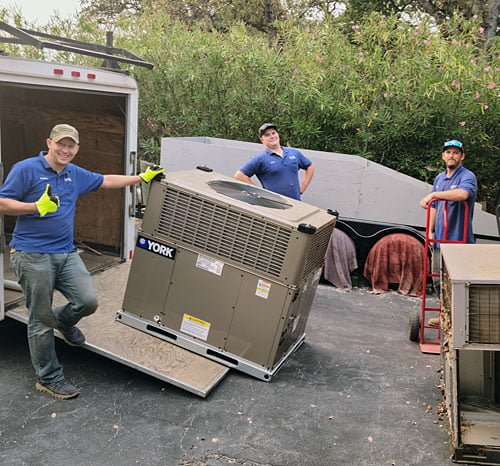
Schedule an Estimate for AC Installation
EXCELLENT Based on 64 reviews
 Posted on Google
 Tim H
Tim HTrustindex verifies that the original source of the review is Google.
Colton hooked your Ecobee thermostat really quick after I wasn’t able to get it working. A fine young man. He was a pleasure.Posted on GoogleHeidi KI highly recommend Bickley's as an honest fair Heating and Air Conditioning Co. They we knowledgeable and professional. Colton was very polite and professional. He performed his test on both my AC and Heating unit quickly and efficiently. Mary at the office sent me my needed inspection results. Just a great, honest company.Posted on GoogleCarson ZBickley's has been instrumental in providing an excellent product with professional and courteous staff (Frankie & Matt) to edge my project forward by moving away from the old power hungry heat pump to a more efficient, affordable system. As predicted by Frank, the new HVAC system they installed consumes less than half the power of the old system. Your team has been amazing! I'm thoroughly impressed! Thank You!Posted on GoogleDena HColton got here early was very efficient and such a nice guy l would adopt him if he needed me!! I just called yesterday...Carlos was very good with my Dad's air conditioner a few weeks ago l recommend them highlyPosted on GoogleVicki PThe technician was efficient, thorough & polite.Posted on GoogleKaren HColton was knowledgeable and efficient. He explained everything clearly. Mary was very helpful also.Posted on GoogleDaniele JService technicians always arrive on time. They call 24 hours ahead of time and from start to finish they are extremely professional. Today they even complemented me on the work I’ve been doing on the backyard and all the progress I’m making. ❤️. They are very personable while professionalPosted on GoogleMaria M“Excellent job. They are a vendor for Maywood Apartments and consistently deliver quality work.”Posted on GoogleElaine RThe service man was personable. Respectful and knowledgeable. Great service.
- Family Owned & Operated
- Licensed & Insured
- Serving Redding & Red Bluff Since 1983