

Ductless Mini Split Installation & Replacement
Ductless mini split systems provide an efficient and flexible way to heat and cool spaces without relying on traditional ductwork. Whether you need better comfort in a single room, an addition, an ADU, a garage conversion, or multiple areas of your home, a properly designed mini split system can provide targeted heating and cooling with independent temperature control.
Bickley’s Air Conditioning & Heating provides professional ductless mini split installation and replacement throughout Tehama and Shasta Counties and surrounding Northern California communities. Family-owned and serving the North State since 1983, our team designs and installs single-zone and multi-zone ductless systems based on the actual heating and cooling requirements of the property.
We install systems for homes with no existing ductwork as well as properties where homeowners want to supplement an existing central HVAC system. As a Mitsubishi Electric Diamond Contractor, Bickley’s also brings specialized experience with Mitsubishi ductless heat pump technology while working with major HVAC equipment brands.
To discuss a ductless system for your home, call Bickley’s at (530) 527-7188.
What Is a Ductless Mini Split System?
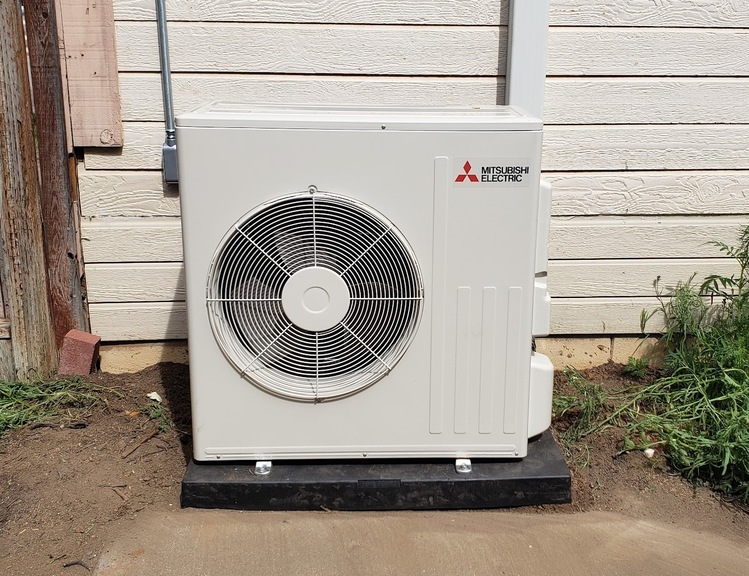
A ductless mini split is a heating and cooling system that connects an outdoor heat pump unit to one or more indoor air-handling units. Instead of distributing conditioned air through a network of ducts, each indoor unit delivers heating or cooling directly into the room or zone it serves.
Most modern mini splits use heat pump technology, allowing the same system to provide both air conditioning and heating. This makes ductless equipment a practical year-round comfort solution for many Northern California homes.
Systems can be configured for a single space or multiple areas of the property. The appropriate design depends on the home’s layout, heating and cooling loads, number of zones, equipment capacity, and how each space will be used.
Where Does a Mini Split Make Sense?
Ductless systems are especially useful when extending an existing central HVAC system would be difficult, expensive, or inefficient. They can also provide an alternative for properties that were never built with conventional ductwork.
Common mini split applications include:
- Older homes without existing ductwork
- Room additions and remodeled spaces
- Accessory dwelling units (ADUs)
- Garage conversions
- Workshops and detached spaces
- Home offices
- Guest rooms and guest houses
- Bedrooms with persistent comfort problems
- Bonus rooms and converted attic spaces
- Areas that are difficult to connect to an existing duct system
- Homes where different areas need independent temperature control
A mini split can also supplement an existing central heating and cooling system. For example, a room with heavy afternoon sun or a converted space added after the original HVAC system was installed may have different comfort requirements from the rest of the home.
The important question is not simply whether a mini split will fit in the space. Proper system design requires determining the heating and cooling load and selecting equipment capable of meeting that demand efficiently.
Single-Zone vs. Multi-Zone Mini Split Systems
Ductless equipment can be designed around one room or several areas of a home. Understanding the difference between single-zone and multi-zone configurations is an important part of choosing the right system.
Single-Zone Mini Split Systems
A single-zone system connects one outdoor unit with one indoor unit. This configuration is commonly used when one particular space needs heating and cooling independently from the rest of the property.
Single-zone systems can work well for garages, ADUs, additions, home offices, workshops, guest rooms, and other individual areas. Because the equipment is selected specifically for that zone, correct sizing is essential to achieving efficient and comfortable operation.
Multi-Zone Mini Split Systems
A multi-zone system connects multiple indoor units to compatible outdoor equipment. Each indoor unit serves a separate room or area, allowing homeowners to create different comfort zones throughout the property.
For example, bedrooms may be maintained at different temperatures from a living area, or spaces that are rarely occupied can be conditioned differently from rooms used throughout the day.
Multi-zone design requires careful planning. The number and capacity of indoor units must be compatible with the outdoor equipment, and each zone needs to be evaluated based on its own heating and cooling requirements.
Benefits of Ductless Mini Split Installation
Mini splits offer several advantages when they are correctly matched to the home and application.
- Heating and cooling from the same system
- No traditional ductwork required
- Independent temperature control by room or zone
- Flexible equipment-placement options
- Quiet indoor operation
- Reduced energy loss associated with ductwork
- Efficient comfort for additions and converted spaces
- Single-zone and multi-zone configurations
- Ability to condition spaces that are difficult to serve with central HVAC
Ductless equipment can be highly efficient, but the technology alone does not guarantee efficient operation. System sizing, equipment selection, installation quality, thermostat settings, building conditions, and how individual zones are used all influence actual energy consumption and comfort.
Mini Split vs. Central Air Conditioning
Mini splits and central HVAC systems can both provide effective home comfort, but they solve different problems. Neither option is automatically better for every property.
A ductless system may be particularly appropriate when a home does not have existing ductwork, when only part of the property needs new heating and cooling, or when homeowners want independent control over specific areas.
Central air conditioning may remain the more practical choice when a home already has properly designed ductwork in good condition and the goal is consistent whole-home cooling from a centralized system.
In some homes, the best solution can include both. A central system may continue serving the main house while a ductless unit conditions an addition, ADU, garage conversion, home office, or another area that the existing duct system cannot serve effectively.
Bickley’s evaluates the property and comfort goals before recommending equipment. Our objective is to determine which HVAC configuration makes sense for the application rather than recommending ductless equipment simply because it is available.
Our Mini Split Installation Process
A successful ductless installation begins before equipment is mounted on the wall. Proper planning affects comfort, efficiency, appearance, serviceability, drainage, and long-term system performance.
Depending on the project, our installation process includes:
- Evaluating the space and how it will be used
- Determining heating and cooling requirements
- Selecting appropriate equipment capacity
- Planning single-zone or multi-zone configurations
- Selecting appropriate indoor unit locations
- Determining outdoor equipment placement
- Planning refrigerant-line routing
- Evaluating condensate drainage requirements
- Addressing electrical requirements
- Completing equipment installation and connections
- System startup and operational testing
- Verifying system performance
Equipment that is too large or too small for the space can affect comfort and operation, which is why Bickley’s focuses on proper system sizing rather than relying on a one-size-fits-all recommendation.
What Affects Mini Split Installation Cost?
There is no single price that accurately represents every ductless installation. A straightforward single-zone system serving one room has very different equipment and installation requirements from a multi-zone system designed to condition several areas of a home.
Factors that can affect mini split installation cost include:
- Number of heating and cooling zones
- Required equipment capacity
- Single-zone or multi-zone system design
- Type and style of indoor units
- Outdoor equipment requirements
- Electrical requirements or upgrades
- Length and routing of refrigerant lines
- Condensate drainage requirements
- Indoor and outdoor equipment placement
- Wall, ceiling, or structural access
- Overall installation complexity
An in-home evaluation allows Bickley’s to understand the property, determine the appropriate system design, and provide an estimate based on the actual installation rather than a generic price that may not apply to your home.
Financing is available for qualifying installations, providing another option for homeowners planning a new ductless HVAC project.
Mitsubishi Ductless Mini Split Installation
Bickley’s Air Conditioning & Heating is a Mitsubishi Electric Diamond Contractor with specialized experience designing and installing Mitsubishi ductless heat pump systems. Mitsubishi offers single-zone and multi-zone equipment that can provide efficient heating and cooling for individual rooms, additions, ADUs, older homes without ductwork, and larger zoned applications.
Selecting quality equipment is only one part of a successful ductless project. Proper sizing, indoor and outdoor unit placement, refrigerant-line installation, condensate drainage, electrical requirements, system startup, and commissioning all contribute to long-term comfort and reliability.
Our team evaluates how each space will be used before recommending a system. A mini split serving a frequently occupied living area may have different requirements than equipment installed in a workshop, guest room, garage conversion, or detached ADU.
Replacing an Older Mini Split System
Ductless systems can provide many years of service, but eventually an older system may become less reliable or require a repair significant enough that replacement deserves consideration. Replacement can also provide an opportunity to evaluate whether the original equipment was properly sized and whether the existing configuration still meets the needs of the property.
Mini split replacement may be worth considering when:
- The existing system requires increasingly frequent repairs
- A major component has failed on older equipment
- The system no longer heats or cools the space effectively
- One or more zones have persistent performance problems
- Replacement parts are difficult or expensive to obtain
- The existing equipment no longer meets the comfort needs of the property
- You want to redesign or expand the current zoning configuration
Replacement does not necessarily mean installing the same capacity or configuration that was there before. Bickley’s can reevaluate the space and determine whether the existing system design remains appropriate before recommending new equipment.
Professional Installation Matters
Ductless equipment is sometimes described as simple to install because it does not require traditional ductwork. In reality, installation quality has a major influence on how well the system performs.
Correct equipment sizing, refrigerant-line installation, electrical work, condensate drainage, equipment mounting, evacuation, startup, and system testing all need to be handled correctly. Poor equipment placement can also affect comfort, appearance, airflow, noise, and future service access.
Multi-zone systems require additional planning because the indoor units must be properly matched with compatible outdoor equipment while accounting for the heating and cooling requirements of each zone.
Bickley’s approaches ductless installation as a complete HVAC system design rather than simply mounting equipment and connecting lines.
Ductless Comfort for Northern California Homes
Northern California presents a wide range of heating and cooling conditions. Long periods of summer heat can create substantial cooling demand, while winter temperatures make dependable heating important as well. Because most modern mini splits use heat pump technology, one properly designed system can provide both.
Ductless equipment can be particularly useful in older homes that were built without central ductwork. It can also solve comfort problems created when additions, converted garages, workshops, or other spaces were added without extending the original HVAC system.
For homeowners who want greater control over individual areas, zoning provides another advantage. Instead of conditioning every room to exactly the same temperature, separate indoor units allow different spaces to be adjusted according to occupancy and comfort preferences.
Mini Split Installation in Tehama and Shasta Counties
Bickley’s provides ductless mini split installation and replacement throughout Tehama and Shasta Counties, including Red Bluff, Redding, Anderson, Cottonwood, Shasta Lake, Palo Cedro, Lake California, Los Molinos, Corning, and surrounding North State communities.
Homeowners looking for information specific to our largest service areas can learn more about mini split installation in Redding or ductless mini split installation in Red Bluff.
These dedicated city pages provide additional information about ductless comfort and installation considerations for those communities, while Bickley’s broader service area extends throughout the surrounding region.
Mini Split Repair and Ongoing Service
Like any HVAC equipment, ductless systems require appropriate maintenance and may eventually need repairs. A system that is not heating or cooling correctly should be diagnosed before parts are replaced or the entire system is condemned.
Signs that a mini split may need professional attention include:
- Reduced heating or cooling performance
- An indoor unit that is not responding
- Error codes or warning indicators
- Water leaking from an indoor unit
- Unusual sounds during operation
- Repeated starting and stopping
- One zone performing differently from the others
- Equipment that will not operate
If you already have a ductless system that is experiencing a problem, Bickley’s provides professional mini split repair throughout the region.
Why Choose Bickley’s for Mini Split Installation?
Bickley’s Air Conditioning & Heating has served Northern California since 1983. Our experience includes traditional central HVAC equipment as well as modern ductless heat pump technology, allowing us to evaluate the property as a complete comfort system rather than assuming ductless equipment is always the answer.
- Family-owned and serving Northern California since 1983
- Mitsubishi Electric Diamond Contractor
- NATE-certified HVAC expertise
- Experience with major ductless system brands
- Single-zone and multi-zone system design
- Proper equipment sizing and installation planning
- Experience with heat pump heating and cooling
- Professional equipment placement and installation
- Financing available for qualifying installations
- Ongoing ductless repair and service available
Our goal is to install a system that fits the property, provides dependable comfort, and is designed for long-term operation. That means considering the space, equipment capacity, zoning, placement, electrical requirements, refrigerant-line routing, drainage, and future service access before installation is complete.
Schedule a Ductless Mini Split Installation Estimate
If you are considering a mini split for an addition, ADU, garage, workshop, home office, older home without ductwork, or another difficult-to-condition space, Bickley’s can help determine whether ductless heating and cooling is the right solution.
We provide professional mini split installation and replacement throughout Tehama and Shasta Counties with recommendations based on the actual needs of the property rather than a one-size-fits-all system.
Call (530) 527-7188 or request an estimate to get started with a professionally designed ductless mini split system.
Frequently Asked Questions About Mini Split Installation
How much does mini split installation cost?
Mini split installation cost depends on the number of zones, equipment capacity, indoor unit style, electrical requirements, refrigerant-line length, equipment placement, drainage requirements, and overall installation complexity. An in-home evaluation is the best way to determine the appropriate system and provide accurate project pricing.
Are mini splits good for Northern California weather?
Yes. Modern ductless heat pump systems can provide efficient cooling during hot Northern California summers and heating during cooler weather. Proper equipment selection, sizing, and installation are important to achieving reliable performance in both seasons.
Can a mini split heat and cool my home?
Yes. Most modern mini splits use heat pump technology to provide both heating and cooling. A system may serve one room, several zones, or potentially a larger portion of a home depending on the building and system design.
Can a mini split replace a central HVAC system?
In some homes, yes. A properly designed multi-zone ductless system may provide heating and cooling for multiple areas without traditional ductwork. However, homes with existing duct systems in good condition may be better served by central HVAC. Bickley’s can evaluate the property and determine which approach makes the most sense for the home’s layout and comfort needs.
How many mini split zones can I have?
The appropriate number of zones depends on the property, equipment selected, individual room loads, and compatible outdoor-unit capacity. Multi-zone systems can connect multiple indoor units to outdoor equipment, but the system should be professionally designed rather than selecting the number of zones based only on the number of rooms.
How long does mini split installation take?
Many straightforward single-zone installations can be completed relatively quickly, while multi-zone systems, electrical upgrades, difficult equipment locations, or complex refrigerant-line routing can require additional time. The installation requirements can be evaluated before the project begins.
Where can mini split indoor units be installed?
Indoor units can be installed in appropriate wall, ceiling, or other compatible locations depending on the equipment selected. Placement should account for effective air distribution, refrigerant-line routing, electrical connections, condensate drainage, appearance, and future service access.
Get an Estimate
for mini split installation
EXCELLENTTrustindex verifies that the original source of the review is Google. Colton hooked your Ecobee thermostat really quick after I wasn’t able to get it working. A fine young man. He was a pleasure.Posted on GoogleTrustindex verifies that the original source of the review is Google. I highly recommend Bickley's as an honest fair Heating and Air Conditioning Co. They we knowledgeable and professional. Colton was very polite and professional. He performed his test on both my AC and Heating unit quickly and efficiently. Mary at the office sent me my needed inspection results. Just a great, honest company.Posted on GoogleTrustindex verifies that the original source of the review is Google. Bickley's has been instrumental in providing an excellent product with professional and courteous staff (Frankie & Matt) to edge my project forward by moving away from the old power hungry heat pump to a more efficient, affordable system. As predicted by Frank, the new HVAC system they installed consumes less than half the power of the old system. Your team has been amazing! I'm thoroughly impressed! Thank You!Posted on GoogleTrustindex verifies that the original source of the review is Google. Colton got here early was very efficient and such a nice guy l would adopt him if he needed me!! I just called yesterday...Carlos was very good with my Dad's air conditioner a few weeks ago l recommend them highlyPosted on GoogleTrustindex verifies that the original source of the review is Google. The technician was efficient, thorough & polite.Posted on GoogleTrustindex verifies that the original source of the review is Google. Colton was knowledgeable and efficient. He explained everything clearly. Mary was very helpful also.Posted on GoogleTrustindex verifies that the original source of the review is Google. Service technicians always arrive on time. They call 24 hours ahead of time and from start to finish they are extremely professional. Today they even complemented me on the work I’ve been doing on the backyard and all the progress I’m making. ❤️. They are very personable while professionalPosted on GoogleTrustindex verifies that the original source of the review is Google. “Excellent job. They are a vendor for Maywood Apartments and consistently deliver quality work.”Posted on GoogleTrustindex verifies that the original source of the review is Google. The service man was personable. Respectful and knowledgeable. Great service.