
Ductless Mini Split Installation in Red Bluff, CA
Ductless mini splits can provide targeted heating and cooling without extending a central duct system into every room. They are often considered for older homes without usable ducts, additions, workshops, converted garages, home offices, guest spaces, remodeling projects, and new construction. Bickley’s Air Conditioning & Heating installs Mitsubishi ductless systems in Red Bluff and has served Northern California since 1983. Call (530) 527-7188 to request a mini split installation estimate.Is a Ductless Mini Split Right for Your Space?
A mini split uses an outdoor heat pump connected to one or more indoor units. Instead of moving conditioned air through ducts, each indoor unit heats or cools its assigned zone directly. This design can solve comfort problems that do not justify extending or replacing an entire duct system. It can also give occupants more control over rooms that have different schedules, sun exposure, insulation, or temperature preferences.- A room addition that is not connected to the central HVAC system
- A converted garage, workshop, or detached workspace
- An older home without usable ductwork
- A home office or guest room used on a different schedule
- An upstairs room that remains warmer than the rest of the house
- A remodeling project that creates a new comfort zone
- A new home designed around ductless heating and cooling
Single-Zone or Multi-Zone: What Is the Difference?
A single-zone system connects one indoor unit to one outdoor unit. It can be a straightforward solution for one addition, bedroom, office, workshop, or other defined space. A multi-zone system connects multiple indoor units to compatible outdoor equipment. Each indoor unit controls its assigned area, but all zones share the outdoor system’s available capacity. The design must account for how the zones operate together rather than sizing each room in isolation. More zones are not automatically better. A home with several similar rooms may benefit from a multi-zone design, while a high-demand room or detached space may perform better with dedicated equipment. The decision depends on load, layout, equipment compatibility, line routing, and how each area will be used.How Is a Mini Split Sized Correctly?
Mini split capacity should be based on the heating and cooling load of each zone. Square footage is only a starting point. Windows, insulation, air leakage, ceiling height, sun exposure, occupancy, exterior walls, and connections to adjacent rooms can all change the required capacity. An undersized indoor unit may run continuously without maintaining the thermostat setting during Red Bluff’s hottest weather. An oversized unit may cycle too quickly, create temperature swings, and provide less consistent comfort. In a multi-zone system, the outdoor equipment must support the connected indoor units and the expected combined demand. Equipment selection should also consider whether all zones are likely to call for maximum heating or cooling at the same time.Where Should the Indoor and Outdoor Units Go?
Indoor-Unit Placement
An indoor unit needs unobstructed airflow and a location that distributes conditioned air across the occupied area. Placing it where furniture, cabinets, doors, or architectural features block the discharge can leave part of the room uncomfortable. Wall-mounted units are common, but the best location depends on room shape, ceiling height, exterior-wall access, appearance, service clearance, and where occupants spend time. The unit should not direct uncomfortable airflow at a bed, desk, or frequently used seat when another suitable location is available.Outdoor-Unit Placement
The outdoor equipment needs sufficient clearance for airflow and service. Its location should also account for sound, drainage, direct sun, landscaping, property access, and the distance to the indoor units. Placing the outdoor unit where plants, fencing, stored items, or debris restrict airflow can reduce heat transfer. The supporting surface must also keep the equipment stable and correctly positioned.Refrigerant Lines and Condensate Drainage
Refrigerant tubing, control wiring, and condensate drainage connect the indoor and outdoor equipment. The route should protect these components, remain serviceable, and avoid unnecessary length or visual disruption where practical. Condensate must drain correctly during cooling operation. Poor slope, an unsuitable termination point, or a blocked drain can cause leaks and property damage. Some locations may require a condensate pump when gravity drainage is not practical.Will the Electrical System Support a Mini Split?
Ductless equipment requires suitable electrical capacity, a dedicated circuit, proper disconnects, and wiring matched to the manufacturer’s requirements. A home adding several zones or converting multiple systems to electric heating and cooling may need a closer review of panel capacity. Electrical and refrigerant work should be completed by qualified professionals. Homeowners should not open equipment panels, modify circuits, connect refrigerant lines, or attempt to bypass the controls required for safe operation.Mini Split, Central Air, or a Ducted Heat Pump?
A mini split can be a strong option when ductwork is unavailable, expensive to extend, or unable to serve a new area. It also allows room-by-room control that a single central thermostat cannot provide. Central air may be more appropriate when the home already has well-designed ductwork and the goal is whole-home cooling from one central system. A ducted heat pump can provide both heating and cooling through those ducts. The choice should reflect the entire home rather than one equipment feature. Existing ducts, room layout, electrical capacity, heating needs, desired zoning, project cost, and equipment location all influence which configuration makes the most sense.What Happens During Mini Split Installation?
A ductless installation should begin with equipment and zone planning rather than immediately selecting wall locations. Each part of the system affects capacity, airflow, drainage, electrical requirements, appearance, and long-term service access.- Review the comfort problem: Identify which rooms need conditioning, how they are used, and whether central HVAC already serves part of the space.
- Estimate each zone’s load: Consider construction, windows, insulation, air leakage, sun exposure, occupancy, and Red Bluff’s seasonal conditions.
- Select the configuration: Choose compatible single-zone or multi-zone equipment and determine the required indoor-unit styles and capacities.
- Plan equipment placement: Identify indoor and outdoor locations, refrigerant-line routes, condensate drainage, and electrical connections.
- Install and connect the equipment: Mount the units and complete the mechanical, refrigeration, electrical, drainage, and control work.
- Start and test the system: Confirm heating and cooling operation, airflow, controls, drainage, and communication between components.
- Review system use: Explain temperature controls, filter care, routine operation, and warranty-registration requirements.
What Affects Mini Split Installation Cost?
Mini split installation cost depends on the system design and the work required for the property. A single-zone installation with straightforward access differs from a multi-zone project involving several floors, long line routes, condensate pumps, or electrical modifications.- Number of rooms or zones
- Heating and cooling capacity required
- Indoor-unit styles and placement
- Outdoor-unit configuration
- Electrical-panel and circuit requirements
- Refrigerant-line length and routing
- Condensate-drain or pump requirements
- Wall, ceiling, attic, or crawlspace access
- Removal of existing equipment
- Permits or inspections when applicable
When Should an Older Mini Split Be Replaced?
Replacement is not required every time a mini split develops a problem. An isolated control, drainage, sensor, or electrical fault may be repairable when parts remain available and the equipment otherwise meets the space’s needs. Replacement deserves consideration when breakdowns are recurring, major components are deteriorating, parts are difficult to obtain, or the existing system lacks enough capacity or zoning for the current layout. A remodeled space may also need a different design than the original equipment provided. If the system still has useful service life, mini split repair in Red Bluff may be the better first step. Diagnosis should come before assuming that replacement is necessary.Mitsubishi Ductless Systems Installed by Bickley’s
Bickley’s is a Mitsubishi Diamond Contractor and installs Mitsubishi ductless equipment. Available systems may differ in capacity, indoor-unit style, zone support, control options, efficiency, and heating performance. The most complex system is not automatically the best system. Equipment should match the rooms being conditioned, the expected simultaneous demand, electrical capacity, installation layout, and the homeowner’s comfort priorities. Homeowners comparing Mitsubishi equipment can review the available Mitsubishi mini split options before choosing a final configuration.How Red Bluff Conditions Affect Ductless Systems
Hot, dry summers can place sustained demand on mini split equipment, especially in rooms with large windows, limited insulation, high ceilings, or heavy afternoon sun. Correct sizing and indoor-unit placement help the system distribute cooling where it is needed. Dust and smoke-season conditions can load filters more quickly. Homeowners should inspect and clean washable filters according to manufacturer guidance while leaving coils, refrigerant components, electrical parts, and internal disassembly to qualified technicians. Outdoor units also need clear airflow. Keep stored items, vegetation, and loose debris away from the equipment without opening panels or attempting internal cleaning.Experience Supporting Your Ductless Installation
Bickley’s has served Northern California since 1983 and is family owned and operated. The company is licensed and insured under California Contractor License #754681, and its NATE-certified technicians bring documented HVAC knowledge to equipment and installation decisions. Equipment commonly includes a 10-year parts warranty, while some components may offer additional coverage. Exact terms vary by product and may require timely registration, so confirm the warranty requirements for the selected Mitsubishi system.Request Mini Split Installation in Red Bluff
If you need heating and cooling for one room, several zones, or a home without suitable ductwork, Bickley’s can help you compare ductless configurations. Call (530) 527-7188 to request an estimate for ductless mini split installation in Red Bluff, CA.Frequently Asked Questions
Can a ductless mini split provide both heating and cooling?
Yes. A ductless mini split is a heat pump that can cool a room during hot weather and reverse operation to provide heating during cooler conditions.What is the difference between single-zone and multi-zone mini splits?
A single-zone system connects one indoor unit to one outdoor unit. A multi-zone system connects multiple indoor units to compatible outdoor equipment, allowing separately controlled rooms or areas.Can mini splits heat and cool an entire home?
Mini splits can serve an entire home when the building load, room arrangement, equipment capacity, zone design, and indoor-unit placement support whole-home operation. Some homes are better suited to a combination of ductless and central equipment.How is a mini split sized?
Sizing should account for each zone’s heating and cooling load, including room area, insulation, windows, air leakage, ceiling height, sun exposure, occupancy, and how adjacent spaces connect.Will mini split installation require electrical work?
Mini splits require suitable electrical service, a dedicated circuit, disconnects, and wiring that meets the selected equipment’s requirements. The electrical panel and available capacity should be evaluated before installation.How long does mini split installation take?
Installation time depends on the number and type of indoor units, equipment access, electrical work, refrigerant-line routing, condensate drainage, wall construction, and outdoor-unit location. Multi-zone projects generally require more planning and labor than a single-zone installation.Should I repair or replace an older mini split?
Repair may make sense when the failure is isolated and replacement parts remain available. Replacement deserves consideration when breakdowns are recurring, major components are deteriorating, or the system no longer provides the capacity or zoning the home needs.Are financing and equipment warranties available?
Bickley’s offers financing for qualified customers. Equipment commonly includes a 10-year parts warranty, while some components may offer additional coverage. Financing terms and warranty requirements should be confirmed for the selected system.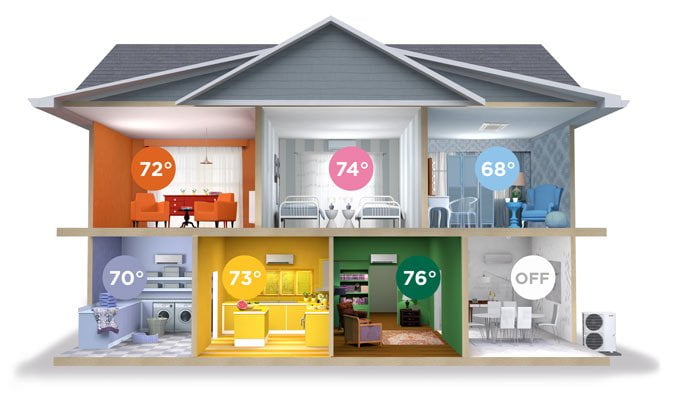
Schedule an estimate for mini split installation
EXCELLENT Based on 64 reviews
 Posted on Google
 Tim H
Tim HTrustindex verifies that the original source of the review is Google.
Colton hooked your Ecobee thermostat really quick after I wasn’t able to get it working. A fine young man. He was a pleasure.Posted on GoogleHeidi KI highly recommend Bickley's as an honest fair Heating and Air Conditioning Co. They we knowledgeable and professional. Colton was very polite and professional. He performed his test on both my AC and Heating unit quickly and efficiently. Mary at the office sent me my needed inspection results. Just a great, honest company.Posted on GoogleCarson ZBickley's has been instrumental in providing an excellent product with professional and courteous staff (Frankie & Matt) to edge my project forward by moving away from the old power hungry heat pump to a more efficient, affordable system. As predicted by Frank, the new HVAC system they installed consumes less than half the power of the old system. Your team has been amazing! I'm thoroughly impressed! Thank You!Posted on GoogleDena HColton got here early was very efficient and such a nice guy l would adopt him if he needed me!! I just called yesterday...Carlos was very good with my Dad's air conditioner a few weeks ago l recommend them highlyPosted on GoogleVicki PThe technician was efficient, thorough & polite.Posted on GoogleKaren HColton was knowledgeable and efficient. He explained everything clearly. Mary was very helpful also.Posted on GoogleDaniele JService technicians always arrive on time. They call 24 hours ahead of time and from start to finish they are extremely professional. Today they even complemented me on the work I’ve been doing on the backyard and all the progress I’m making. ❤️. They are very personable while professionalPosted on GoogleMaria M“Excellent job. They are a vendor for Maywood Apartments and consistently deliver quality work.”Posted on GoogleElaine RThe service man was personable. Respectful and knowledgeable. Great service.